Introduction
위치 | 경기도 수원시 장안구 서부로 2066 성균관대학교 자연과학캠퍼스
용도 | 교육시설
Location | 2066, seobu-ro, Jangan-gu, Suwon-si, Gyeonggi-do
Program | Educational Facility
Agenda

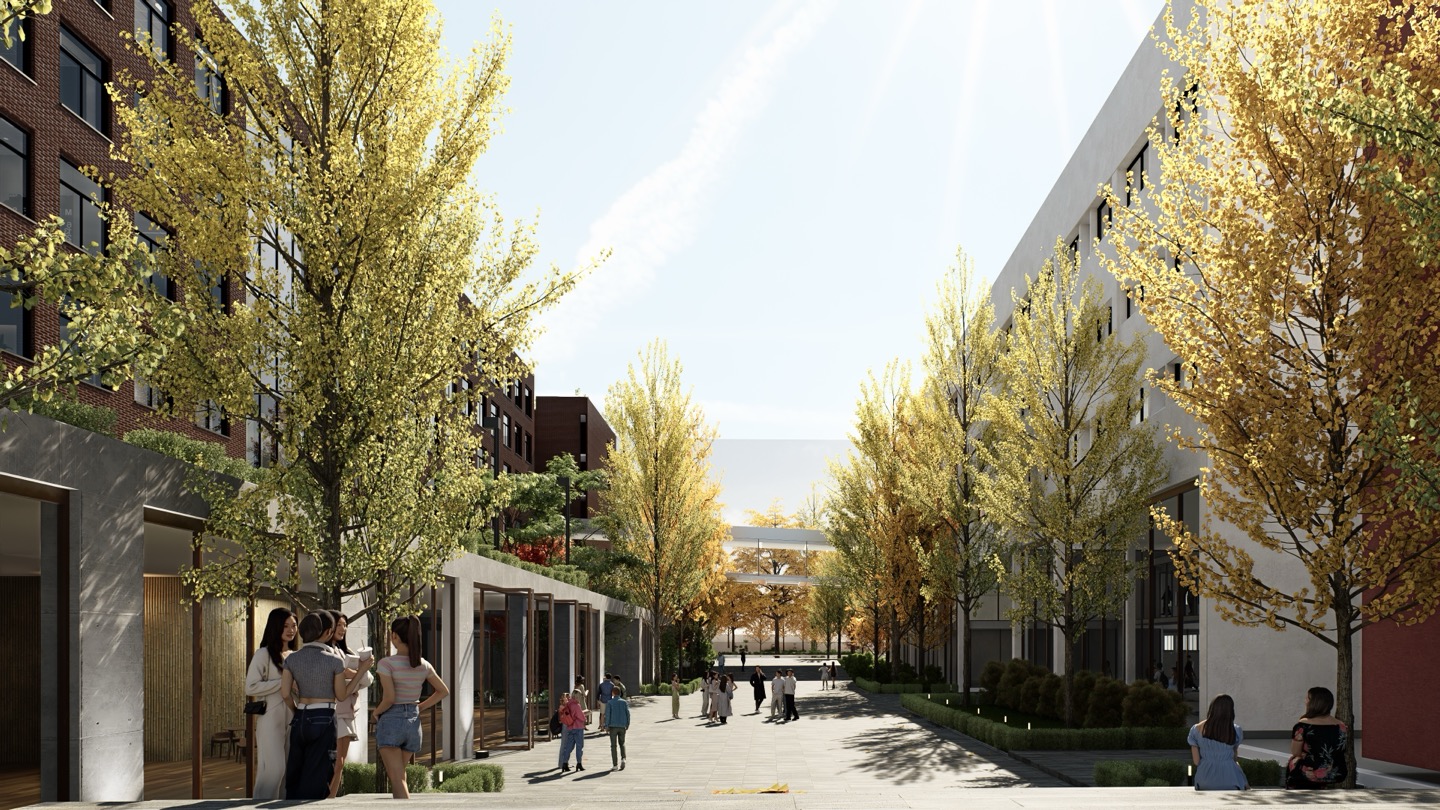
캠퍼스는 학생들이 걸어 다니며 캠퍼스를 거닐 수 있는 보행 친화적인 공간이어야 한다. 하지만 지금의 성균관대학교 캠퍼스는 차도로 인해 보행로가 군데군데 끊겨있으며, 곳곳에 주차장이 위치하고 있어 사고의 위험성 역시 존재한다. 이번 프로젝트에서 가장 중점적으로 진행한 것은 끊겨있는 보행로를 보완할 수 있는 새로운 동선의 제안과 학생들이 사용할 수 있는 더 많은 공간의 증설이었다.
기존에 존재했던 건물들의 외관은 유지하되 실내에 새로이 관입되는 공간들을 조성하였고, 학생들로 하여금 넓은 시야와 탁 트인 캠퍼스를 거닐 수 있게 하고자 하였다. 이를 위해 ‘다공성’을 개념으로 하여 기존 건물이 실내, 실외 둘 다 여러 공간들이 시원하게 뚫리고 연결된 모습을 제시하였다.
The campus should be a pedestrian-friendly space where students can walk freely and enjoy their surroundings. However, the current layout of Sungkyunkwan University’s campus is interrupted by roadways, causing pedestrian paths to be fragmented. Additionally, the presence of numerous parking lots poses safety risks.
In this project, the primary focus was to propose new circulation routes that address the disjointed pedestrian pathways and to expand spaces available for students. While maintaining the exterior of existing buildings, new interior spaces were introduced to enhance accessibility and usability. The goal was to create an open and spacious campus environment where students can experience an uninterrupted flow as they move through the space.
To achieve this, the concept of “porosity” was applied, ensuring that both indoor and outdoor spaces are seamlessly interconnected, allowing for better ventilation, visibility, and movement.
Design

현재 학생들이 이용하고 있는 캠퍼스의 전반적인 모습을 보면, 후문에 인접하여 있는 디지털도서관, 기초학문관, 생명공학관 등은 보행자 동선이 잘 연결되어 있음을 확인할 수 있다. 그러나 반대로 검은선 기준 우측으로 위치한 2개의 공학관은 각 건물의 중정만 존재하며 공학관 간의 연결이나 보행친화적이어야 할 캠퍼스가 차로들로 인하여 끊겨져 있음을 확인할 수 있다.
이에 1공학관과 2공학관 사이를 하나의 큰 보행로로 조성하고, 1공학관과 2공학관 중정을 기준으로 둘을 잇는 하나의 큰 축을 생성하여 학생들이 공학관을 유기적으로 보행할 수 있게 하고자 하였다.
When examining the overall layout of the campus currently used by students, it is evident that buildings near the back gate—such as the Digital Library, the Basic Sciences Building, and the Biotechnology Building—have well-connected pedestrian pathways.
In contrast, the two Engineering Buildings located to the right of the black line lack such connectivity. Each building has its own central courtyard, but there is no direct link between them, and the surrounding roadways disrupt the pedestrian-friendly nature of the campus.
To address this, a large pedestrian pathway was designed between Engineering Building 1 and Engineering Building 2. Additionally, a major axis was established by connecting the courtyards of both buildings, allowing students to move seamlessly between them. This creates a more cohesive and pedestrian-friendly environment within the engineering complex.


기본적으로 존재하는 sunken과 기존 길을 정확하게 분리하고, sunken 공간이 주 보행로가 될 수 있게 하고자 하였다. 이에 기존 차로 공간을 깎아내고 길과 맞닿아 있는 2공학관 건물 지하로 땅을 밀어내었다. 이후 이 지하 공간에 1공학관을 연결하는 새로운 동선을 마련하였고, 이 동선에서 사람들이 이용할 수 있는 지하 공간을 동선 양 옆으로 구상하였다. 이는 마치 구멍을 뚫는 듯한 모습으로 보여지길 원했고, 건물과 대지에 다양한 구멍을 뚫어 새로운 동선과 다공성을 보여주고자 하였다.
The existing sunken space was distinctly separated from the main pathways to establish it as the primary pedestrian route. To achieve this, a portion of the existing roadway was excavated, extending the ground into the underground level of Engineering Building 2, where it meets the path.
A new circulation route was then introduced in this underground space, connecting to Engineering Building 1. Along this pathway, additional underground spaces were designed on both sides for public use. The intention was to create an effect reminiscent of perforations, with various openings punctured through the buildings and the ground. This approach enhances connectivity and introduces a sense of porosity, reinforcing the fluid movement throughout the campus.
Drawings


Images


Maquette


credit
구형찬 Hyungchan Koo
신준호 Junho Shin
조유니 Uni Jo
3학년 2학기 3rd Grade Fall Semester Project
2024